Unlike many legendary rock groups that built their identity around long-term consistency, Guns N’ Roses evolved through tension, departures, reinventions, and dramatic returns. Lineup changes were never just personnel adjustments — they reshaped the band’s sound, chemistry, ambition, and live energy.
To understand Guns N’ Roses, you must understand their eras.
Below is a complete breakdown of every major lineup phase — from the explosive Appetite for Destruction formation to the current touring configuration in 2025.
Classic Lineup (1985–1990)
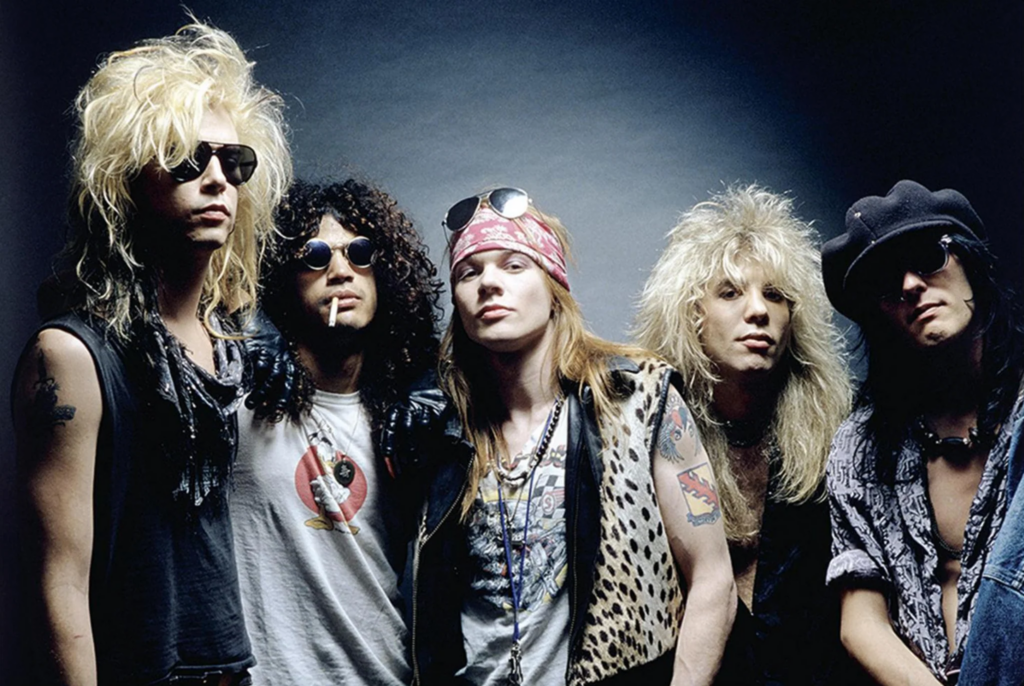
This is the lineup behind Appetite for Destruction — the most iconic era in the band’s history.
- Axl Rose – Lead vocals, piano
- Slash – Lead guitar
- Izzy Stradlin – Rhythm guitar, backing vocals
- Duff McKagan – Bass, backing vocals
- Steven Adler – Drums
Why This Lineup Worked
This wasn’t just five musicians — it was a perfect imbalance.
- Axl brought volatility and extreme vocal range.
- Slash delivered blues-driven melody.
- Izzy provided restraint and structure.
- Duff injected punk aggression and rhythmic sharpness.
- Adler gave the band a loose, swinging groove.
Remove any one of them, and the chemistry collapses.
Appetite for Destruction sounded dangerous because it was built on tension. The rhythm section was loose but tight enough. The guitars were raw but melodic. Axl’s voice felt unstable but controlled.
This lineup defined Guns N’ Roses’ DNA.
Use Your Illusion Era (1990–1993)
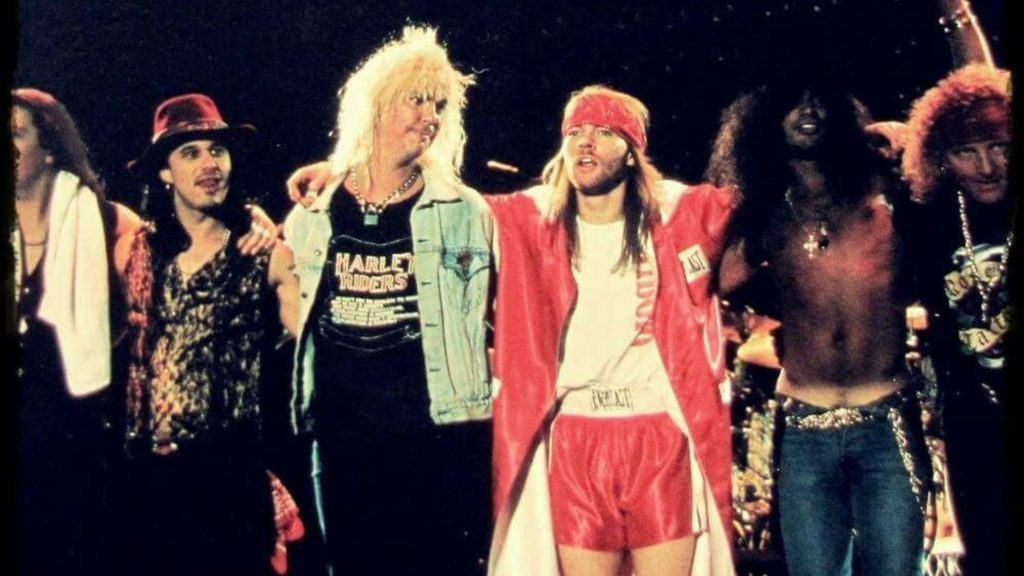
Expansion, Discipline, and Stadium Scale
By the early 1990s, the band had evolved — and fractured.
Members:
- Axl Rose – Vocals, piano
- Slash – Lead guitar
- Duff McKagan – Bass
- Izzy Stradlin → Gilby Clarke – Rhythm guitar
- Matt Sorum – Drums
- Dizzy Reed – Keyboards, synthesizers
What Changed Sonically
Steven Adler’s departure marked a huge shift.
Matt Sorum was technically stronger and more disciplined. His playing was tighter, heavier, more controlled. The loose swing of Appetite gave way to a more powerful, stadium-ready rhythm section.
The addition of Dizzy Reed expanded the sound dramatically. Piano, synth textures, and layered arrangements turned Guns N’ Roses into something bigger than a street rock band.
The Use Your Illusion I & II albums reflected this:
- Orchestration
- Political commentary
- Long-form compositions
- Greater ambition
The band grew larger — but also more internally unstable.
Mid-1990s to 2000s Lineup
Reinvention Under Axl Rose
After Slash and Duff departed, Guns N’ Roses effectively became an Axl-led project.
This era included a rotating roster of musicians:
Key members from this era include:
- Robin Finck – Guitar
- Buckethead – Guitar
- Bumblefoot (Ron Thal) – Guitar
- Paul Tobias – Guitar
- Tommy Stinson – Bass
- Brain (Bryan Mantia) – Drums
- Josh Freese – Drums
- Chris Pitman – Keyboards
- Richard Fortus – Guitar
- Frank Ferrer – Drums
The Chinese Democracy Era
This period culminated in the 2008 release of Chinese Democracy.
The sound was radically different:
- layered production
- industrial elements
- modern rock textures
- extended recording timelines
The chemistry-driven chaos of the original lineup was replaced by studio precision and perfectionism.
Fans were divided. Critics were divided.
But this era proved one thing:
Guns N’ Roses could exist without their original members — even if they felt fundamentally different.
Reunion & Modern Era (2016–2024)
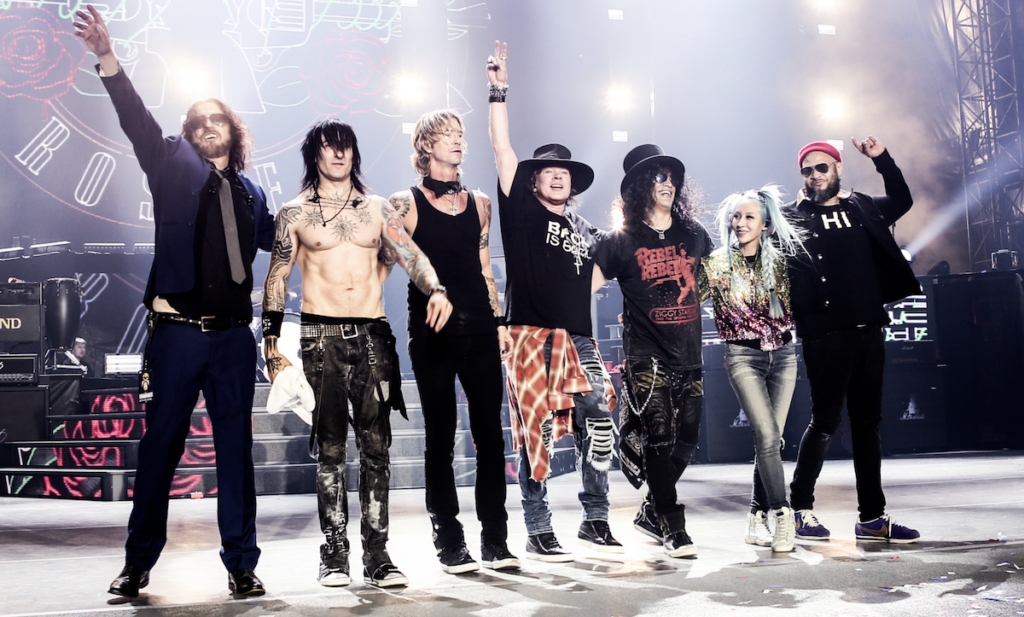
Restoration of the Core
In 2016, something few believed would happen did.
Slash and Duff rejoined Axl Rose.
The reunion tour became one of the most commercially successful tours in rock history. It wasn’t just nostalgia — it was a recalibration of chemistry.
Core Members:
- Axl Rose – Lead vocals
- Slash – Lead guitar
- Duff McKagan – Bass
Supporting Members
- Richard Fortus – Rhythm guitar
- Dizzy Reed – Keyboards
- Melissa Reese – Keyboards, synthesizers, backing vocals
- Frank Ferrer – Drums
What Changed
The return of Slash and Duff restored the melodic and rhythmic identity that defined Guns N’ Roses.
The band sounded:
- heavier than the Illusion era
- tighter than the Appetite era
- more mature overall
The chaos remained — but it was controlled.
Current Guns N’ Roses Lineup (2026)
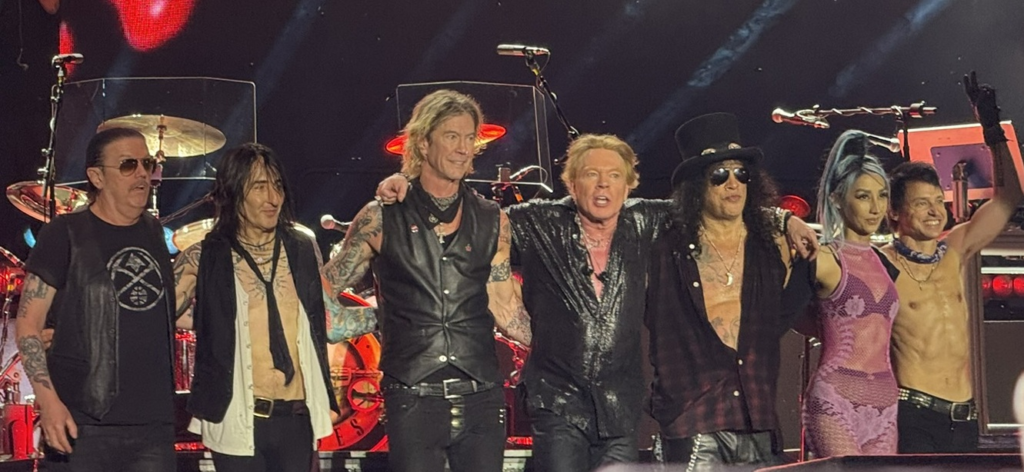
The band continues to tour globally with the following members:
- Axl Rose – Lead vocals
- Slash – Lead guitar
- Duff McKagan – Bass
- Richard Fortus – Rhythm guitar
- Dizzy Reed – Keyboards
- Melissa Reese – Keyboards, backing vocals
- Isaac Carpenter – Drums
How Lineup Changes Affected the Sound
Each era sounded different because each era was different.
- Appetite Era: Raw, unstable, street-driven.
- Illusion Era: Grand, ambitious, orchestrated.
- Chinese Democracy Era: Layered, controlled, modernized.
- Reunion Era: Balanced, legacy-aware, refined.
The band’s instability was never accidental. It was structural.
Complete Timeline
- 1985 – Formation in Los Angeles
- 1987 – Appetite for Destruction
- 1991 – Use Your Illusion I & II
- 1996 – Original lineup collapse
- 2008 – Chinese Democracy release
- 2016 – Slash & Duff reunion
- 2026 – Ongoing global touring
Notable Former Members
For a complete historical overview, here are all significant past contributors:
- Izzy Stradlin
- Steven Adler
- Matt Sorum
- Gilby Clarke
- Buckethead
- Bumblefoot
- Robin Finck
- Paul Tobias
- Chris Pitman
- Tommy Stinson
- Josh Freese
- Brain (Bryan Mantia)
Final Analysis
Guns N’ Roses never had a stable lineup.
Their instability became their identity.
But through every change, one truth remains:
The chemistry between Axl Rose, Slash, and Duff McKagan defines what Guns N’ Roses ultimately mean to rock history.
And that chemistry continues to shape the band today.