Introduction
When looking at the song title “Civil War”, first and foremost, one can tell that it is not a traditional civil protest song.
There are no protests chants. No indication of which side is right and which is wrong. No calls to unify a country that is divided.
Instead, the song is forcing listeners to take a look at violence, and to not excuse it.
It’s as if the song is trying to capture the experience of standing in the middle of a civil protest/war where it is total chaos, and everyone around is only justifying it in one way or another. There is anger, but cold and direct. There is sadness, but it is controlled, and there is above all violence. There is also a finger of accusation pointed not at one specific person, but rather everyone that is benefiting from the violence and suffering of others.
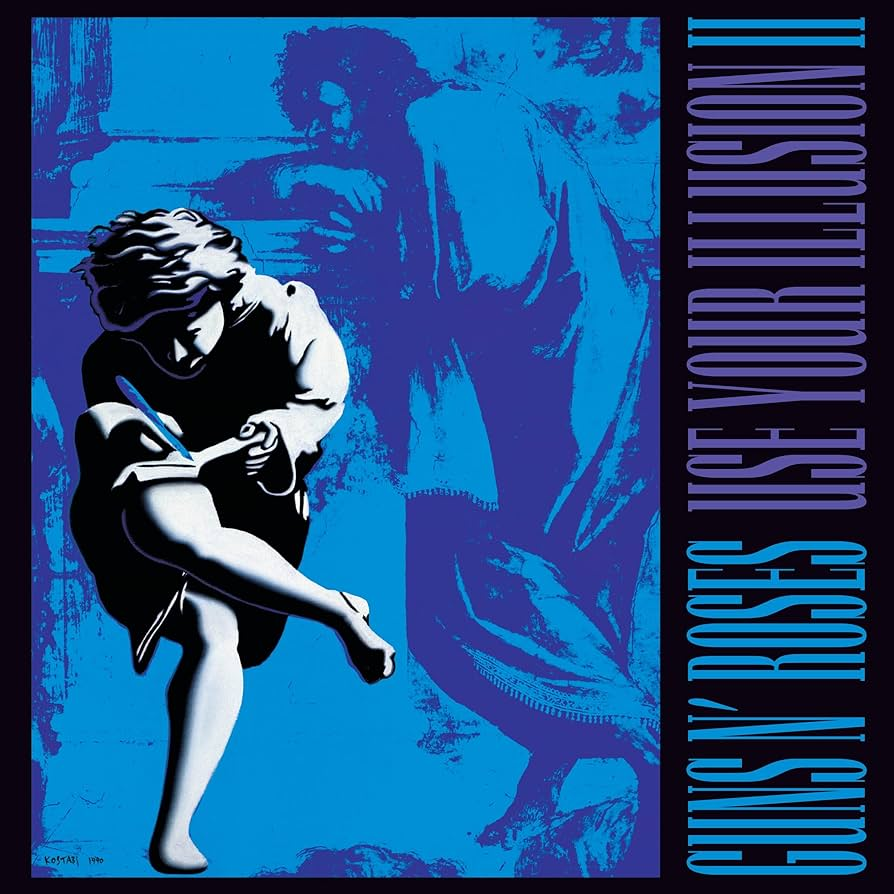
When Guns and Roses released “Civil War” in 1990, they had crossed a line in not just writing about personal destruction, but what society does to the whole. This song, and others like it, can be considered one of the most mature, and ethically charged pieces of music produced by one of the most misunderstood bands of all time.
Origin Story — Born From Disillusionment
When writing the song “Civil War”, the band had lost their ‘outsider’ status. Guns N’ Roses had cultivated a large following and wielded their power heavily. War and violence permeated the media and the indifference to suffering was a cultural norm.
The song opens with a brief sample from the movie Cool Hand Luke.
“What we’ve got here is failure to communicate.”
That line opens the song and sets the tone. This writing is not limited to a single conflict, country, or ideology. It is every instance of violence and oppression of the vulnerable in the name of power.
The lyrics from Axl Rose come from a place of deep discontent. No interest in nationalism or the romanticization of war. Rose is presenting a difficult question: in the name of ideas, who benefits from violent death?
What the song is really about
Although titled “Civil War,” the song is trying to communicate something much larger than a single historical event, namely something like manufactured division.
The song points to the leadership, systems, and ideologies that view human cost as an expendable resource, and that advocates that, through the rhetoric of honor, duty, and freedom, violence is somehow warranted.
The song is essentially asking, “Who taught us to hate the people we have never met?”
“Who taught us to rationalize and justify suffering for a cause?”
“Why is it that the people in power never seem to bleed?”
The “war” in the song is not just a physical one. It’s a psychological one. It is the act of convincing people, especially the everyday and really view people, that killing and dying is something that is noble, necessary, and inevitable.
Psychological Depth — Anger Without Blindness
What makes “Civil War” so powerful is its emotional restraint. This is not explosive rage. It’s focused disillusionment.
The narrator isn’t screaming because he doesn’t understand the world. He’s angry because he understands it too well. The song captures the psychological shift from naive belief to bitter awareness — the moment when slogans stop working and reality sets in.
There’s also a deep sense of moral exhaustion. The lyrics reflect someone who has watched the same patterns repeat endlessly: leaders speaking, soldiers dying, civilians suffering, and nothing truly changing. That repetition creates a unique kind of anger — not hot and impulsive, but heavy and slow-burning.
Unlike many political songs, “Civil War” doesn’t position the singer as morally superior. Instead, it implicates everyone. Silence, compliance, and blind loyalty are treated as part of the problem. That makes the song uncomfortable — and honest.
Guitar Work — Space, Restraint, and Weight
The guitar work on “Civil War” is a lesson on emotional pacing.
Instead of being aggressive and in-your-face, the guitars breathe and create space. The message hits harder with the tension and atmosphere.
Slash in this song refrains from using a lot of showmanship. His playing is quite melodic and expressive with feeling. The tone is clean and exposed, but the audio is a bit gritty. Each note feels intentional, and well placed.
The slow movement of the chord progressions reinforce the reflective nature of the song. The guitars feel like they have to hold back and refrain from being aggressive. This reflects the internal complexities of a person who is angry but has a lot of truth to convey.
When the distortion does come in, it feels earned. It doesn’t explode with excitement; it rises to highlight the frustration and inevitability. The solos feel mournful, like the guitar is tired of asking if nothing will ever change.
March Without Glory – The Rhythm Section
The bass and drums in “Civil War” steer clear of any sort of triumphant heroism. There are no celebratory hero marches. Steady, and almost ceremonial, the rhythm is void of any sort of celebratory feeling.
The tempo of the song further cements the feeling of hopelessness in the situation. It neither rushes nor stalls. The song progresses and feels like history is repeating itself. It is slow and heavy, yet as the song continues, it gives a feeling of unstoppable momentum.
The bass gives the song a sense of weight and gravity and anchors the guitars and vocals. It reminds us that the song is not purely conceptual. There are indeed bodies, lives, and the repercussions of everything at stake.
Fury Control
Of all of Axl Rose’s amazing vocal work, his performance in this song is perhaps one of the most studied. He hasn’t incorporated any of his overused choking screams, and rather than use his signature shocking screams, he opted for a total opposite approach.
His voice sometimes is held back with low, and almost soft tones as he articulates a syllag with a conversational sort of approach, as though he is explaining something apparent, that no one has the guts to say. Then, the anger breaks through the quiet, as an act of chaos transformation for unchained vocal fury, with a hint of soft apocalyptic destruction. All of this speak, represents an accusation.
The emotional peaks become elevated because of the tight control exercised by Axl, and in combination with the soft, low, and soft spoken vocals Axl layers over the instruments, the destruction occurs. It genuinely feels like the breaking point has been reached and for someone who has been patient for far too long, the point has been reached.
Why “Civil War” Still Resonates Today
The reason why the song “Civil War” continues to matter because the wars the song speaks of have not reached a resolution.
People continue to be separated by the unsolvable puzzles they did not originate.
Power will continue to be defended by the sacrifice it never spends.
There will continue to be violence that will be explained through the language that people use to justify the act of violence.
The reason why “Civil War” continues to have relevance is not there is no other song that bears the same name. The song is about the patterns that abide. People are likely to return to the song not because it has the answer. Instead, it is likely people are drawn to the song because it speaks to the violence that all systems depend on. It is the systems of people that are of violence.
The Final Thoughts
The song “Civil War” remains one of the most emotionally and intellectually sophisticated songs that the group Guns and Roses has done. It outright rejects the simplistic ideas that there is a good and evil side to the song. Instead, it carries the additional burden of the listeners to bear the ambiguity, the unease, and the complexity of the issue. The strength of the song is the way it avoids all the glorification that comes with all the destruction. It is not evil to the song to destroy things. It is not a triumph to shed blood. It is the dull and hurtful truth that history continues to repeat itself because an abundance of people live in comfort due to the destruction that is a result of the repetition of history.
Musically, the track mirrors this philosophy perfectly. The guitars don’t dominate; they speak. The rhythm doesn’t celebrate; it carries weight. The vocals don’t perform anger; they deliver judgment.
Addressing the audience as equals is part of what makes “Civil War” stand the test of time. It doesn’t tell you what to think; it makes you think about what you know. That is a much more uncomfortable realization than a catchy phrase or a protest song.
That’s why this song continues to speak to people nearly 30 years later.
Not because of the volume.
Because of the truth.