The best guitars for beginners in 2026 combine affordability, comfort, and reliable build quality. Popular beginner models like the Yamaha FG800, Fender CD-60S, and Squier Stratocaster are widely recommended because they are easy to play and offer excellent value for new players.
When starting with a new instrument, it can be fun, but at the same time daunting. Music stores can be overwhelming, especially the guitar section. You might see dozens of instruments with different finishes, pickup configurations, cutouts, brands, and price points. All of that variance can lead to a lot of confusion.
There is a cold hard fact that every beginner learning how to play guitar must come to terms with at one point: there is no best beginner guitar out there. The best beginner guitar is the one that is going to keep you inspired to play. If you know you have a quality instrument that is going to play, sound, and feel great to play at the end of the day, you are going to grow as a player.
Some of the best beginner guitars that people trust and start playing recommend have great value and build quality along with beginner-friendly playability.
| Guitar | Type | Typical Price | Best For |
|---|---|---|---|
| Yamaha FG800 | Acoustic | $200–$260 | Best overall beginner acoustic |
| Fender CD-60S | Acoustic | $200–$280 | Comfort + easy playability |
| Epiphone DR-100 | Acoustic | $150–$220 | Best budget acoustic starter |
| Yamaha FS800 | Acoustic | $210–$270 | Smaller body for comfort |
| Ibanez AW54OPN | Acoustic | $230–$320 | Warm tone for fingerstyle |
| Yamaha Pacifica 112V | Electric | $300–$380 | Versatile first electric guitar |
| Squier Affinity Stratocaster | Electric | $250–$350 | Beginner rock & pop tones |
| Ibanez GRX70QA | Electric | $220–$320 | Fast neck for beginners |
Yamaha FG800 Acoustic Guitar – one of the most recommended beginner guitars in the world.

The Yamaha FG800 has become a legendary starter guitar for a reason. It features a solid spruce top, something you rarely see at this price point. That means the guitar produces a fuller, richer tone than many beginner instruments. The neck profile is comfortable, which helps beginners learn chords faster without fighting the instrument. Yamaha also has a reputation for consistency – you almost never get a “bad one.” If you want the safest, most reliable beginner guitar, this is it.
Pros: amazing sound for the price, extremely reliable
Cons: dreadnought body can feel large for smaller players
Fender CD-60S Acoustic Guitar – a classic beginner guitar with smooth playability.

Fender created the CD-60S specifically for new players. The neck has rolled edges on the fingerboard which makes the neck feel smoother, and assists in learning barre chords and hand position shifts. The top is solid spruce, which produces a strong, bright and balanced sound. The dreadnought body produces great sound projection which is ideal for strong vocal accompaniment. This is a great option if you want the Fender brand with beginner-friendly comfort.
Pros: comfortable neck, bright tone
Cons: slightly bulkier body shape
Epiphone DR-100 Acoustic Guitar – an affordable guitar that still delivers quality.

One of the best entry acoustic guitars is Epiphone’s DR-100. It may not be the best in class as compared with the Yamaha and Fender offerings since those feature solid tops and are priced much higher, but it is definitely in the same league as them as far as pricing and solidly constructed warm, pleasant sounds, making it ideal for practice and casual playing. During the years, Epiphone, being Gibson’s subsidiary, has built a reliable pedigree in making guitars and so it shows in the DR-100 and therefore is a great entry point for a dependable budget acoustic guitar.
Pros: affordable, durable, classic acoustic tone
Cons: laminated top limits tonal depth
Yamaha FS800 Small Body Acoustic Guitar – perfect for smaller hands or younger players.

The FS800 has a smaller body size, and with it, a smaller concert-size body. This translates into great ease of use and playability. For this reason, many beginners of the smaller hand variety tend to choose it more regularly, The spruce top and build quality remain the same, and the sound is brighter and more focused than the larger dreadnought models.
Pros: comfortable size, excellent Yamaha quality
Cons: less bass than larger guitars
Ibanez AW54OPN Artwood Acoustic Guitar – warm, vintage tone for beginners.

Ibanez guitars are designed for speed and comfort, and the AW54OPN is no different. It features a solid mahogany top, which gives a warmer and mellower tone than spruce tops. This is great for softer acoustic music and finger style. The slim neck is designed for easy chord transitions which is great for beginners.
Pros: warm tone, comfortable neck
Cons: darker sound may not suit all styles
Squier by Fender Affinity Stratocaster Electric Guitar – one of the best beginner electric guitars.
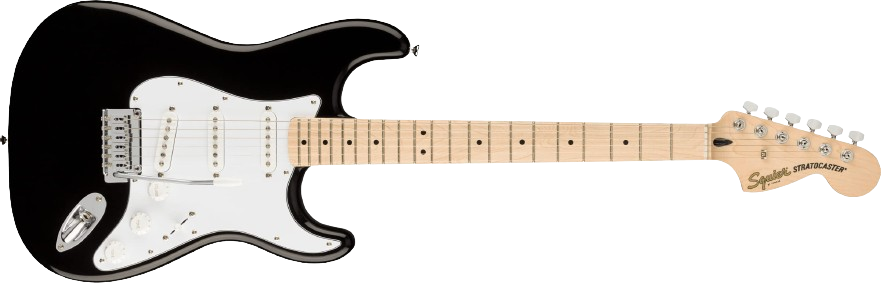
The Squier Affinity Stratocaster is a great starter guitar. If you want to play rock, blues, or pop music then an electric guitar is a great option. The Squier Affinity Stratocaster is a Fender Strat copy. Strats are great beginner guitars because they are lightweight, easy to play, and versatile due to their 3 pickups. Many famous guitarists started with a Strat-style design, so its a great choice for beginner guitarists.
Pros: versatile sound, comfortable electric guitar design
Cons: requires an amplifier
How to Choose the Right Beginner Guitar
Choosing the best guitar for beginners doesn’t have to be complicated. Focus on a few key factors.
Guitar Type
There are three main types of guitars beginners consider:
Acoustic guitars
Great for learning chords and songwriting. No amplifier required.
Electric guitars
Easier to press the strings and great for rock or metal.
Classical guitars
Use nylon strings and are common for classical or flamenco styles.
Most beginners start with acoustic or electric depending on the music they want to play.
Tonewood and Sound
The wood used in a guitar influences its tone.
Spruce tops tend to sound bright and balanced, making them popular for beginner guitars. Mahogany produces warmer tones with stronger midrange. While beginners don’t need to obsess over tonewoods, choosing a guitar with a solid top usually provides better sound quality.
Price Range
Most beginner guitars fall between $150 and $400.
Cheaper guitars can be difficult to play because of poor setup or construction. Spending slightly more often results in a guitar that feels better and encourages more practice.
Brand Reputation
Reliable brands reduce the risk of quality issues. Yamaha, Fender, Ibanez, and Epiphone are among the most trusted manufacturers for beginner guitars.
These companies have spent decades refining entry-level instruments.
Comfort and Size
Comfort is critical for beginners. If a guitar feels too large or heavy, practice becomes frustrating.
Smaller body guitars like the Yamaha FS800 are excellent options for players with smaller hands or younger students.
Tips for Beginners – Frequently Asked Questions About Beginner Guitars
When people search for the best guitar for beginners, they usually have a lot of practical questions. Below are some of the most common ones new players ask before buying their first guitar.
1. Is acoustic guitar easier than electric guitar for beginners?
This question comes up constantly among new players. Electric guitars are physically easier to play because the strings require less pressure. That means beginners often find it easier to press down notes and chords on an electric guitar. Acoustic guitars, however, are simpler to start with because they don’t require an amplifier, cables, or extra equipment. If your goal is to play rock, metal, or blues, an electric guitar might keep you more motivated. If you want to learn basic chords and play songs around a campfire or at home, an acoustic guitar is often the best starting point.
2. What is the best guitar for beginners?
The best guitar for beginners is one that feels comfortable in your hands, stays in tune, and sounds good enough to motivate you to practice regularly. Many guitar teachers recommend models like the Yamaha FG800 or Fender CD-60S because they offer reliable build quality and beginner-friendly playability. The most important factor is that the guitar doesn’t fight you while learning. If the strings are too hard to press or the instrument constantly goes out of tune, practicing becomes frustrating very quickly.
3. How much should I spend on my first guitar?
Most beginner guitars fall between $150 and $400. In this price range you can find instruments that are well-built, sound good, and remain comfortable for daily practice. Spending less than $100 often leads to guitars with poor tuning stability or uncomfortable setups. At the same time, beginners usually don’t need to spend more than $400 until they know they will continue playing long term.
4. Are Yamaha guitars good for beginners?
Yes, Yamaha guitars are widely considered some of the best beginner guitars available. Yamaha has built a reputation for consistent quality and reliable construction even in their entry-level models. Their beginner guitars often include features like solid spruce tops and comfortable neck shapes. Because of this, many guitar teachers recommend Yamaha models as safe choices for first-time players.
5. Should beginners start with acoustic or electric guitar?
The answer depends mostly on the type of music you want to play. Acoustic guitars are great for singer-songwriters, pop music, and learning basic chords. Electric guitars are more suitable for rock, metal, blues, and many modern styles. Some beginners choose acoustic guitars because they are simpler and require less equipment. Others choose electric guitars because they are physically easier to play and offer more tonal variety.
6. Is it harder to learn guitar on an acoustic guitar?
Acoustic guitars generally require more finger strength because the strings are thicker and the tension is higher. This can make the first few weeks of playing slightly more challenging. However, practicing on an acoustic guitar helps develop finger strength quickly. Many players feel that starting on acoustic guitar builds solid technique that transfers well to electric guitar later.
7. What size guitar should beginners buy?
Most adult beginners should start with a full-size guitar. However, players with smaller hands or shorter arms may feel more comfortable using a concert-size guitar or a 3/4-size model. The most important factor is that the guitar feels natural when you hold it. If the body feels too large or awkward, practicing for long periods can become uncomfortable.
8. Do beginners need a guitar with a solid top?
A solid top is not absolutely necessary for beginners, but it usually improves sound quality. Solid wood tops resonate more naturally than laminated wood, producing a fuller and louder tone. Many beginner guitars in the $200–$300 range now include solid spruce tops, making them excellent value for new players who want better sound.
9. Are cheap guitars bad for beginners?
Not all cheap guitars are bad, but extremely low-cost instruments can create problems. Poor tuning machines, rough frets, and high string action can make learning difficult and frustrating. Spending a little more on a well-built beginner guitar can significantly improve the learning experience.
10. Can I learn guitar without a teacher?
Yes, many people successfully learn guitar without formal lessons. Online tutorials, video lessons, and practice apps provide structured learning paths for beginners. However, a teacher can help correct mistakes early and guide your progress more efficiently. Some beginners start with online learning and later take lessons to refine their technique.
11. How long does it take to learn guitar?
With consistent practice, beginners can usually play simple songs within a few weeks. Learning basic chords and switching between them smoothly may take a few months. Becoming a confident guitarist takes longer, but steady daily practice leads to consistent progress.
12. How often should beginners practice guitar?
Practicing every day is the best approach for beginners. Even short sessions of 10–20 minutes per day can lead to noticeable improvement over time. Consistency is more important than practicing for long hours occasionally.
13. Do I need accessories when buying my first guitar?
Yes, a few basic accessories make learning guitar easier. Beginners typically need a tuner, guitar picks, and possibly a strap for playing while standing. Extra strings are also useful in case a string breaks. A gig bag or case helps protect the guitar during storage or travel.
14. Can beginners learn guitar using only chords?
Yes, many beginners start by learning simple chord shapes and strumming patterns. Once you know a few basic chords like G, C, D, and Em, you can play hundreds of popular songs. Learning chords is one of the fastest ways to begin making real music on the guitar.
15. Are electric guitars easier on your fingers?
Electric guitars typically use thinner strings and lower tension than acoustic guitars. Because of this, they require less finger pressure to play notes and chords. Beginners who struggle with finger strength sometimes find electric guitars more comfortable during the early stages of learning.
16. What songs should beginners learn first?
Many beginner songs use only three or four chords. Popular beginner-friendly songs include “Knockin’ on Heaven’s Door,” “Wonderwall,” “Horse With No Name,” and “Stand By Me.” These songs allow beginners to practice chord transitions and rhythm while still playing recognizable music.
17. How long do guitar strings last?
Guitar strings usually last between two and three months depending on how often you play. Strings gradually lose brightness and tuning stability as they wear out. Replacing old strings helps maintain good tone and playability.
18. Is it okay to buy a guitar online?
Buying guitars online has become very common. Online retailers often offer detailed product descriptions, customer reviews, and flexible return policies. Many beginners choose to buy their first guitar online because it allows them to compare prices and read feedback from other players.
19. Can kids learn guitar on adult guitars?
Children can learn on full-size guitars, but smaller guitars are often easier for younger players to handle. A 3/4-size guitar can provide better comfort and playability for kids under the age of twelve. Choosing the right size helps prevent fatigue during practice.
20. Does an expensive guitar make you a better player?
An expensive guitar does not automatically make someone a better player. Skill develops through practice and dedication. A well-built beginner guitar simply makes learning easier and more enjoyable. The most important factor is consistent practice and enjoying the process of learning music.