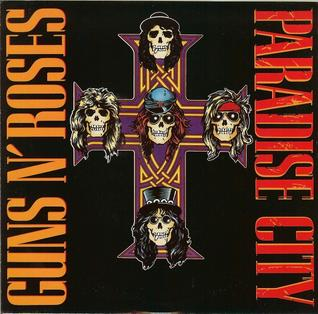
At first listen, “Paradise City” sounds like a simple anthem about wanting to go somewhere better — somewhere beautiful, exciting, and full of pleasure. But beneath its stadium-sized chorus lies something more complicated. The song contrasts fantasy with decay, hope with disillusionment, and longing with reality.
“Paradise City” is not clearly defined. It may represent home, innocence, fame, success, or an imagined escape from urban struggle. The ambiguity is important. The song is built around desire — not certainty.
It is less about arriving somewhere and more about wanting to leave where you are.
The Chorus – The Dream of Escape
“Take me down to the Paradise City / Where the grass is green and the girls are pretty”
The chorus presents an almost cartoonish image of perfection. “Grass is green” suggests natural beauty and peace. “Girls are pretty” implies pleasure, attraction, and idealized living. It feels exaggerated on purpose — almost too perfect.
Subtextually, this reads like someone imagining paradise rather than describing a real place. It sounds like a postcard version of happiness. The repetition reinforces longing. This is not confidence — it is yearning.
“Take me home (I want you, please, take me home)”
The word “home” shifts the tone. Paradise may not be a glamorous city at all. It could be childhood, simplicity, or a time before struggle began.
The plea in “please” introduces vulnerability. Unlike “Welcome to the Jungle,” which was confrontational, this song contains emotional openness. The narrator is asking for rescue.
Verse 1 – Survival in Reality
“Just an urchin living under the street”
The image shifts dramatically. From green grass to homelessness. An “urchin” suggests abandonment, poverty, or social invisibility.
This creates contrast. The dream of paradise is born from harsh conditions.
“I’m a hard case that’s tough to beat”
The narrator toughens himself in response to hardship. It suggests survival instinct. Living on the edge forces resilience.
Subtextually, this reflects how struggle builds defensive identity.
“I’m your charity case, so buy me somethin’ to eat / I’ll pay you at another time”
There is irony here. The narrator calls himself a “charity case,” but promises repayment. It reflects pride mixed with desperation.
This line subtly critiques systems where people must rely on pity while still pretending independence.
“Take it to the end of the line”
This phrase suggests endurance — pushing forward no matter what. It may also hint at finality, as if reaching the limit of patience or sanity.
The tension between survival and exhaustion becomes visible.
Fame and Risk
“Rags and riches, or so they say, you gotta / Keep pushing for the fortune and fame”
This line references the classic American Dream narrative. The idea that poverty can transform into wealth through persistence.
But the tone feels skeptical. “Or so they say” introduces doubt. It questions whether the promise is real.
“You know it’s, it’s all a gamble when it’s just a game”
Success is framed as gambling. Talent and effort may not guarantee results. The industry becomes a casino.
The subtext here is about unpredictability. The dream is seductive, but the odds are unclear.
“You treat it like a capital crime / Everybody’s doing their time”
Now the metaphor shifts toward imprisonment. “Doing their time” suggests punishment or confinement. The city becomes a prison rather than paradise.
This reinforces the contrast: the fantasy is freedom, the reality is entrapment.
Urban Suffocation
“Strapped in the chair of the city’s gas chamber”
This is one of the darkest lines in the song. The city is compared to an execution device. It suffocates its inhabitants.
The metaphor suggests pollution, stress, addiction, or mental suffocation. Paradise is nowhere in sight here.
“Why I’m here, I can’t quite remember”
The narrator begins to question his original purpose. Ambition loses clarity.
This line reflects burnout — forgetting why you chased the dream in the first place.
“The surgeon general says it’s hazardous to breathe”
This references cigarette warnings but expands into something broader. It implies that simply existing in this environment is dangerous.
The city itself becomes toxic.
“I’d have another cigarette, but I can’t see”
Blindness enters the narrative. Smoke clouds vision. This could symbolize addiction obscuring clarity, or success blinding judgment.
The narrator knows it’s harmful but remains tempted.
“Tell me, who you’re gonna believe?”
This line suggests conflicting narratives. Society sells the dream. Experience tells another story.
The listener must choose which version of paradise to trust.
Distance and Disillusionment
“So far away”
Repetition emphasizes emotional distance. Paradise is not just geographically distant — it feels psychologically unreachable.
The dream exists, but it cannot be touched.
Cultural Commentary
“Captain America’s been torn apart now / He’s a court jester with a broken heart”
“Captain America” symbolizes national ideals — strength, justice, the American Dream. Being “torn apart” suggests collapse of those ideals.
Turning into a “court jester” implies mockery. What once inspired pride now entertains cynicism.
This is subtle social commentary. The myth of paradise is unraveling.
“Turn me around and take me back to the start”
Now the longing becomes temporal rather than spatial. The narrator wants to return to an earlier version of life.
Paradise may simply be the past.
“I must be losin’ my mind, ‘Are you blind?’ / ‘I’ve seen it all a million times’”
Frustration builds. The narrator feels trapped in repetition. The dream has become predictable illusion.
There is exhaustion in these lines.
Final Section – Obsession with the Idea of Paradise
As the song progresses toward its climax, the repetition intensifies. “Take me home” becomes almost desperate. The narrator wants confirmation that something better exists.
“I wanna see how good it can be”
This line captures the core theme. Paradise may not even be defined — it is simply the possibility of improvement.
The desire is not for a specific place, but for relief.
What Paradise Really Means
Throughout the song, “Paradise City” shifts meaning:
At first, it sounds like pleasure and glamour.
Then it contrasts with poverty and struggle.
Then it becomes a symbol of suffocation.
Finally, it becomes nostalgia and longing.
Paradise is never clearly located. That ambiguity is intentional. The song captures the human tendency to believe happiness exists somewhere else.
In reality, the narrator may already be in the so-called paradise — Los Angeles, fame, opportunity — yet still feels trapped.
Core Themes
“Paradise City” explores longing, disillusionment, social decay, addiction, and the fragile promise of the American Dream. It reflects the psychological tension between ambition and exhaustion.
Unlike “Welcome to the Jungle,” which exposes danger directly, “Paradise City” disguises critique inside a stadium anthem. It sounds triumphant, but it is built on escape.
It asks a simple question:
If paradise is real, why are we trying so hard to leave where we are?