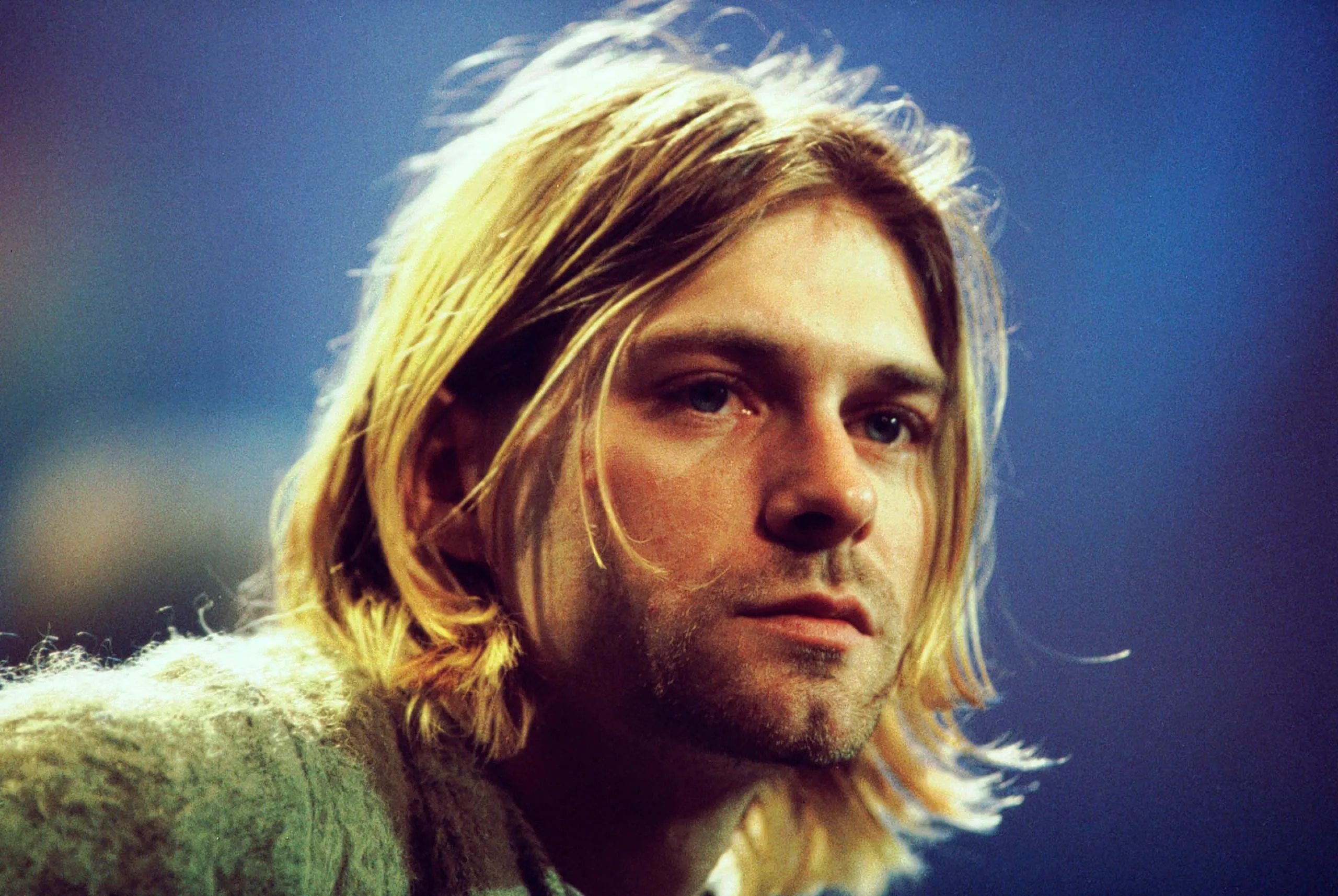
Kurt Cobain never intended to become a cultural icon, lead a generation, or change the world of music. If you look at his career, everything he did was a reaction to something. It was a reaction to pain, noise, misunderstanding, and eventually, to fame. What makes Cobain such an interesting figure, even so many years after his death, is not the myth surrounding him. Rather, it is the fact that he tried to fight against the myth at every turn.
Cobain seemed different from other artists who chase after fame as he seemed uncomfortable as fame was handed to him. He wanted to create honest music and didn’t like making music that felt anthemic or like it defined a generation. The tragic thing is that his honesty was very precise and resonated even though that was never his intention.
Music as a Private Necessity
Kurt Cobain didn’t think of music as an art form. More as a way of dealing with his inner turmoil. To him, songwriting wasn’t a way to build a career or a legacy. It was a way to cope with trauma and express what words couldn’t. Nirvana’s music was like that because, a lot of the time, it was emotionally blunt. It was a little childish. Raw, unfinished and cyclical and boring. They had an urgency to get the songs out with no time to polish, and that was a trait, not a flaw.
Cobain did not perfect ideas. Smoothing them out would take a level of emotional detachment that he did not have. Everything Cobain did was emotional, not mechanical. If something felt good, that was the only reason. He did not align himself to the idea of rules.
There is a reason Nirvana songs feel so immediate; they don’t sound like grand arrangements and compositional feats they put together to show off. They sound like real emotions and states captured in the moment.
The Quiet Intelligence Behind the Noise
Because of how he constructed his songs, Cobain is seen by many as careless or unfit because of the depth of understanding needed to operate the dynamics, contrasts, and restraints present in many of his pieces. Many people viewed Nirvana’s songs as being built on the foundation of the loud/quiet structure model that many bands in that era used, however, Cobain created Nirvana’s sound as an imitation of the emotional landscapes of the universe he experienced.
Numerous songs performed by Nirvana include verses that sound dry and are devoid of any feelings, while the accompanying choruses carry extreme feelings. Even though this is done as part of the design of the piece, this pattern serves as an emotional representation of the mental state of an individual where during depressive periods, there are long brakes of silence, and these periods are often interjected with extreme emotional displays.
Cobain knew that not everything has to be as complex to be impactful. Sometimes, the emotional releases experienced as the music is being played is the end result from the Lord of the Rings movie soundtracks knowing when to be still and allowing the moments of extreme emotional activity to occur.
Lyrics as Distance and Protection
One of the most misunderstood aspects of Kurt Cobain’s work is his use of abstract, fragmented lyrics. Critics often tried to decode them as puzzles or symbols, missing their true function. Cobain did not write to be deciphered; he wrote to protect himself.
Clear statements invite interpretation, judgment, and ownership. By keeping his lyrics ambiguous, ironic, or deliberately contradictory, Cobain maintained a boundary between himself and the listener. The audience could feel the emotion without fully accessing its source.
This lyrical ambiguity allowed him to be both honest and hidden at the same time. The pain is obvious, but its exact shape remains private. In a world eager to define and label him, this was one of the few ways Cobain could retain control.
Fame as Emotional Violence
Nirvana’s explosion into mainstream popularity hit like a freight train. Cobain viewed fame as a big, negative exposure rather than a small, positive validation. What he kept personal was now really, really public.
Being bestowed with the press label of ‘voice of a generation’ was an honor he did not want. He worried Cobain was celebrating audience indifference by ignoring the complaint. He we perceived mw doing little to criticize the world, when the world was full of violence and pain. He was worried his audience was celebrating indifference.
Success was an outlet Cobain transformed into a full public performance as a deeply negative exposure, undermining the validation. The distraction was not personal, rather, public and deeply destabilizing.
Rejection of the Rock Star Myth
Even as Cobain was playing the part of a Rock Star on stage, he never fully embraced that identity for himself. He openly critiqued the Rock and Roll industry for the sexism, homophobia, and male fragility. He distanced himself from the culture that made him famous.
It was not a performance. Cobain’s alienation was authentic. He did not want to belong to a system built on dominance and he spectacle. What he wanted was empathy, not admiration.
This empathy vs alienation conflict defined Cobain’s music and interviews. It created an identity that he was constantly negotiating, and it had a visible impact on him.
Vulnerability Without Redemption
One of the most disturbing things to consider about Cobain’s work is the way it offers little to no hope, growth, or resolution. His songs claim no transformations, and present an almost eternal existence of painful, unresolvrd suffering.
This is what still feels uncomfortable about the music. It doesn’t push you towards the light or towards any cleansing. It just lets discomfort breathe.
He didn’t frame suffering as a journey. He viewed it as an ailment.
Legacy Without Intention
Kurt Cobain shaped the world of music for the reason he was unsure of himself. When he started singing his songs, he showed the uncertainty, the contradiction, the vulnerability, and the popularity of music all at the same time. Cobain didn’t want to get fame and didn’t want to achieve anything. He just wanted to show the world what he saw and what he was thinking. He showed the world how protected and safe all music was. The voice of Cobain didn’t have to be loud and bragging. He wanted to sing and for everybody to hear him sing. Sadly, he passed before he could achieve everything he wanted. Still, he achieved everything. He showed how vulnerable he was. He was the audio for the mirror and gave a reflection for countless people. Simply, Kur was Cobain. He showed emotion through his music and for that everyone became a mirror.